.png)
Come Jine We
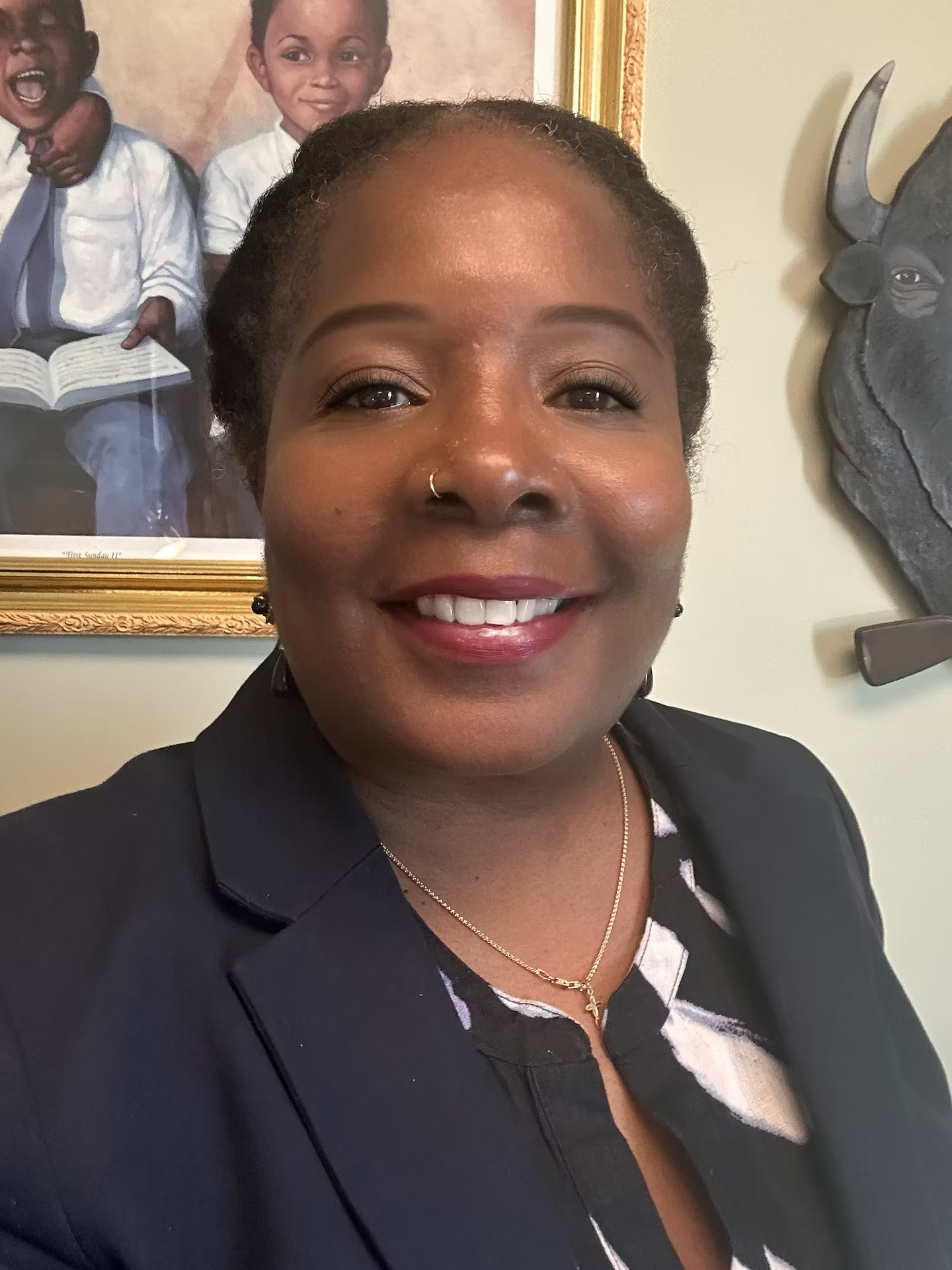
I was born and raised in Boston. But the first language I learned was not the one my teachers wanted to hear.
My mother came north at the tail end of the Black migration out of the South. She brought the Sea Islands with her. She speaks Gullah.
At home, language moved with a rhythm that did not come from Boston. It carried the voices of elders, the humor of family conversations, and the memory of generations who had lived along the Carolina coast long before I was born. That language traveled north with my mother.
But when I went to school, I learned quickly that this language did not belong there.
One day while answering a question in class, my teacher stopped me in the middle of speaking. I remember the interruption more than the sentence itself. She told me I could not speak that way in her classroom. If I wanted to succeed, I needed to learn to speak properly.
Properly meant something else.
Soon I found myself in language labs wearing headphones and repeating words into a microphone. We practiced vowels and consonants slowly and carefully. Say the word again. Say it the right way. Remove the rhythm that shaped the way I spoke.
At the time I thought I was simply learning English.
What I was learning was how to leave my mother tongue behind.
The language of my family was treated as if it were broken English that needed repair. The school called this improvement. But what it required was separation.
I learned to divide my voice.
In school I practiced the language of textbooks and teachers. At home I listened to the language of my mother and the elders around her. I became fluent in translation long before I understood what I was translating.
Years later, when I arrived in college, that division followed me.
One afternoon I received an essay back from a professor. In the margin next to one of my sentences she had written a word I had never seen before.
Syntax.
I stared at it for a long time. I had no idea what it meant.
Eventually I went to the library and picked up a grammar book. I began teaching myself the language of sentence structure. Subjects. Verbs. Clauses. Punctuation. The architecture of English sentences. I studied how ideas were supposed to move across a page so meaning appeared clear and orderly.
I learned how to write sentences the academy could recognize.
But as I studied those rules I noticed something else. The language I grew up hearing did not move according to the same structures. Gullah carried its own rhythm and logic.
A phrase like Com Jine We, which means come join us, does not require the structure English demands. Its meaning lives in the cadence of the words and in the shared understanding of the people speaking them.
In the classroom those differences were rarely explained as variation. They were treated as mistakes.
So I learned two systems at once. I learned how to write sentences that satisfied professors and grammar books. At the same time I carried inside me another language shaped by migration, memory, and survival.
In college, I watched the film Daughters of the Dust. The story follows a Gullah family at the beginning of the twentieth century as they face a decision about whether to remain on the Sea Islands or leave for the mainland.
As the film unfolded something inside me shifted.
The landscapes looked familiar. The voices sounded familiar. The tension between leaving and staying felt like a story I already knew.
For the first time I saw the language I had been trained to suppress treated as culture and inheritance rather than something improper.
Around that same time I encountered an essay by James Baldwin titled “If Black English Isn’t a Language, Then Tell Me, What Is?” Baldwin writes that language grows out of the lives of the people who speak it. It reflects their history, their relationships, and the conditions they live under. What many dismiss as dialect is often a language shaped by survival.
Reading Baldwin helped me understand something I had felt, but had never fully named. The issue was never grammar. The issue was power.
Recently someone reminded me of the history of the Rosetta Stone. The stone carries the same message written in three scripts. Hieroglyphics. Demotic Egyptian. Greek. Scholars could read Greek, and that knowledge helped them unlock the meaning of the other texts.
What interested me was the hierarchy inside that translation. Greek carried the authority of the empire. Demotic was the language of everyday life. Hieroglyphics preserved sacred knowledge.
Each language existed in the same society, but they were not treated equally.
The Atlantic world worked in a similar way. Africans forced across the ocean carried many languages with them. On the rice plantations of the Carolina and Georgia coast those languages met English and one another. Out of that meeting emerged Gullah, a language created so people from different places could communicate and survive.
But languages born in the margins of power are often misunderstood by those in authority. Instead of being recognized as a linguistic system, Gullah was labeled broken English.
Looking back I see that my education asked me to abandon one half of the translation. I was taught the language of institutions while being discouraged from valuing the language that carried the memory of my community.
The irony is that my life has been shaped by language.
I write. I teach. I study stories and how people tell their histories. My work moves between worlds. The language of the academy. The language of my elders.
For a long time I believed mastering one language meant leaving the other behind.
What I understand now is that both shaped my voice.
The lesson I had to unlearn was simple. The language of home was not something to outgrow.
It was an inheritance.
A record of survival carried forward in sound and memory.
And sometimes even now the voice of home still speaks first.
Com Jine We.
Come join us.
Bridgit is a writer, strategist, and cultural leader with more than two decades of experience helping mission-driven organizations bring their stories to life, secure transformative funding, and build equity-centered systems. Through Medium Communications, my consultancy, I lead strategic initiatives that bridge legacy, justice, and innovation.
Lorem ipsum dolor sit amet, consectetur adipiscing elit. Suspendisse varius enim in eros elementum tristique. Duis cursus, mi quis viverra ornare, eros dolor interdum nulla, ut commodo diam libero vitae erat. Aenean faucibus nibh et justo cursus id rutrum lorem imperdiet. Nunc ut sem vitae risus tristique posuere.
Lorem ipsum dolor sit amet, consectetur adipiscing elit. Suspendisse varius enim in eros elementum tristique. Duis cursus, mi quis viverra ornare, eros dolor interdum nulla, ut commodo diam libero vitae erat. Aenean faucibus nibh et justo cursus id rutrum lorem imperdiet. Nunc ut sem vitae risus tristique posuere.