.jpg)
Same Names
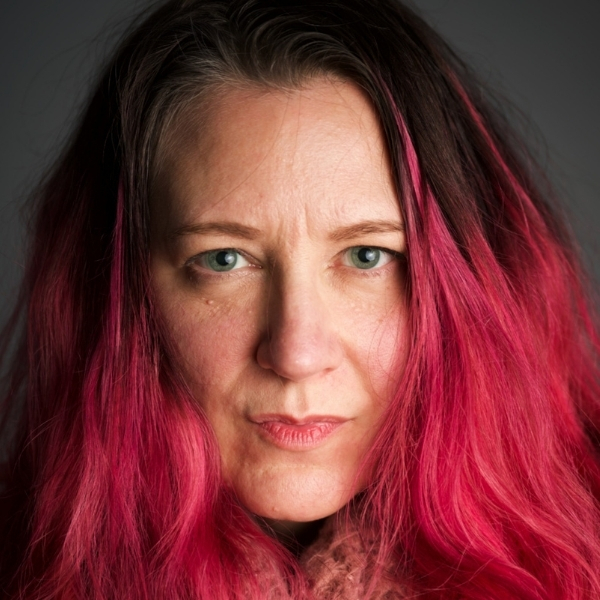
I was not built for friendships with women — not the way other girls seemed to do it. That sounds like a complaint. It isn’t. But it is the kind of thing you get to say at forty-nine, looking back at the kid who didn’t know the rules, who kept getting called bossy when she was just trying to be honest, who moved every few years and learned that the right way to leave was quietly, before anyone could leave first. The kind of kid who watched other girls do friendship like they’d been handed a manual that she never received. The kind of kid who watched them swap secrets like currency and build elaborate hierarchies and unwrite them by Tuesday, or who stood in the middle of all of it nodding along like she understood, but did not. I learned friendship with women the way some people learn a second language as an adult. Late. Self-consciously. Always slightly off in my conjugations…
I made friends anyway. The ones I kept don’t look anything like the ones I made. They are not the same friendships anymore. None of them. Not the one with the woman I met when I was seventeen and she was nineteen, who I sat with in the Roxy at one in the morning because it was the only place we could go at that hour without ID, kissing anyone who met my fancy, climbing waterfalls, smoking some shit I’m still telling myself was just really good weed, being kids in a city neither of us was supposed to be loose in yet… And now? Now we are forty-nine and fifty-one. Three divorces between us. Three kids between us. The kids are older than we were when we met. Same two people on either end. A whole different conversation in the middle. Not the one with the extrovert who collected me along with a small flock of other neurodivergent introverts and made room for us where there wasn’t before. The kind of woman who could not see a wallflower without picking it up and putting it in water. We were her project for a while, then we were her people, and then we were something else entirely and I couldn’t tell you where one stage stopped and another started. Not the one with the work spouse who treated everything we did as a two-person operation and never once kept score, who I was once featured in a pandemic article alongside, who I would have walked through fire for in those years. And who I now mostly trade notes with about which non-dairy milks won’t kill her, which crackers are safe, and which packaged cookies have hidden almond flour. I didn’t see that coming. I’m grateful for it anyway…
What I’m trying to say is, my closest friendships with women have been rewritten so many times that the originals are unrecognizable. The friend stays. You both turn the friendship into something new without meaning to. And then something else. And then something else. And one day you look up and you don’t recognize the woman across the table. But then you do. She’;s been your friend for half your life. I don’t know what to do with that except keep showing up. I don’t know what changed. Maybe I’ve gotten better at receiving friendship. Maybe they got better at offering it. Maybe we both figured out — slowly, by accident, mostly when we stopped trying — that the version of us who became friends in the first place was just the prologue…I was a girl who moved every few years and learned early that goodbye was the default. Maybe I’m only able to see this now because I’ve finally been in one place long enough for the friendships to bend and re-bend around me without snapping. Maybe what I once mistook for failure — the shape of a friendship being unrecognizable from where it started — is actually what success looks like.
I don’t know… I do know that the women still in my life are not the women I started with. Same names. Same warmth. Different relationships. And somehow, that’s the thing that finally — fucking finally —makes me think I might be okay at this after all.
Cami Kaos is a writer, autistic woman, and former tech community organizer who spent more than a decade building inclusive spaces in an industry that rarely made room for people like her. After burning out from constant caretaking and code-switching, she turned inward—to reclaim the parts of herself that were silenced to make others comfortable. Cami writes about identity, survival, and neurodivergence—not always without apology, but with growing conviction. These days, she’s not interested in holding it all together anymore—just holding what matters. You can find Cami at camikaos.com. Bring snacks.
Lorem ipsum dolor sit amet, consectetur adipiscing elit. Suspendisse varius enim in eros elementum tristique. Duis cursus, mi quis viverra ornare, eros dolor interdum nulla, ut commodo diam libero vitae erat. Aenean faucibus nibh et justo cursus id rutrum lorem imperdiet. Nunc ut sem vitae risus tristique posuere.
Lorem ipsum dolor sit amet, consectetur adipiscing elit. Suspendisse varius enim in eros elementum tristique. Duis cursus, mi quis viverra ornare, eros dolor interdum nulla, ut commodo diam libero vitae erat. Aenean faucibus nibh et justo cursus id rutrum lorem imperdiet. Nunc ut sem vitae risus tristique posuere.