.jpg)
The Hermit's Lesson
I met Elizabeth in my mid-twenties, when I still believed racism belonged to another era. In my mind, it wore white sheets and pointed hoods. It was loud, obvious, easy to name. I could not yet understand how something so brutal could also be quiet, ordinary, embedded.
We were part of a cohort that called ourselves freedom fighters. We applied to be there, paid a fee to enter, and once inside, we studied the teachings of Howard Thurman, Martin Luther King Jr., and a lineage of Black political thought that asked us to do more than critique the world. We were expected to change it. Each of us, through whatever gifts we carried, was tasked with confronting white supremacy and capitalism and helping others find their way out of both.
Elizabeth was the oldest among us, a white woman in her sixties, and the only one who spoke about racism in a way that unsettled me enough to listen.
“We are racist,” she told me plainly. “We are born into it. We have to unlearn it. We have to undo it.”
I remember the clarity of it. No apology. No performance. Just fact.
I was not white. I did not know what it felt like to be formed inside that system from the beginning. But hearing her name it made something shift. It gave the abstraction weight. It made racism feel less like a relic and more like a structure that could live inside a person, quietly, convincingly.
Elizabeth also told me about her life before she found us. She had married young in the Midwest. She had five children. She survived domestic violence. She did not come to this work until later, after her children were grown, after she had lived enough life to know that something else was possible.
There was something in her story that echoed my mother’s. The early marriage. The sense that life had been decided too soon. The late realization that there was still another path, still time to claim it.
Years passed. We graduated from the program and scattered into the world, carrying what we could. I carried Elizabeth’s words with me. I wore them like a shawl, especially in moments when America revealed itself plainly, when racism was no longer theoretical but present, structural, undeniable.
Every now and then, we would speak. A phone call here, a check-in there. Then, like many relationships formed in intensity, we drifted.
About a month ago, I thought of her—not casually, but with a kind of insistence. I looked for her number. Disconnected. I searched for her online. Nothing. Finally, I typed her name and hometown into a search bar and found her again, though not in any way I expected.
Elizabeth had become a hermit.
She now lives alone, in prayer, in near silence, devoted to God and to the unseen work of intercession.
I sat with that for a long time.
I felt heartened, though I could not fully explain why. Perhaps because it felt like a continuation of what she had always been doing—stripping away illusion, committing herself to something difficult and true. Or perhaps because it felt like a kind of peace she had earned.
And still, I wonder.
Is hermitage a form of healing, or a retreat from a world that has taken too much? Is it devotion, or is it what happens when life has done you so badly that solitude feels like the only honest response? Who benefits from a life lived in silence and prayer? Why does it matter?
I do not have answers to those questions.
But I wrote to her.
I sent a letter to the church where she now lives, and I thanked her—for her clarity, for her courage, for telling me something I was not yet ready to understand, but needed to hear.
For being present in my life during a time when everything still felt possible, when everything was still forming.
I do not know if she will write back.
But I know this:
She changed the way I see the world.
And wherever she is, in that quiet life she has chosen, I hope she knows that her voice still carries.
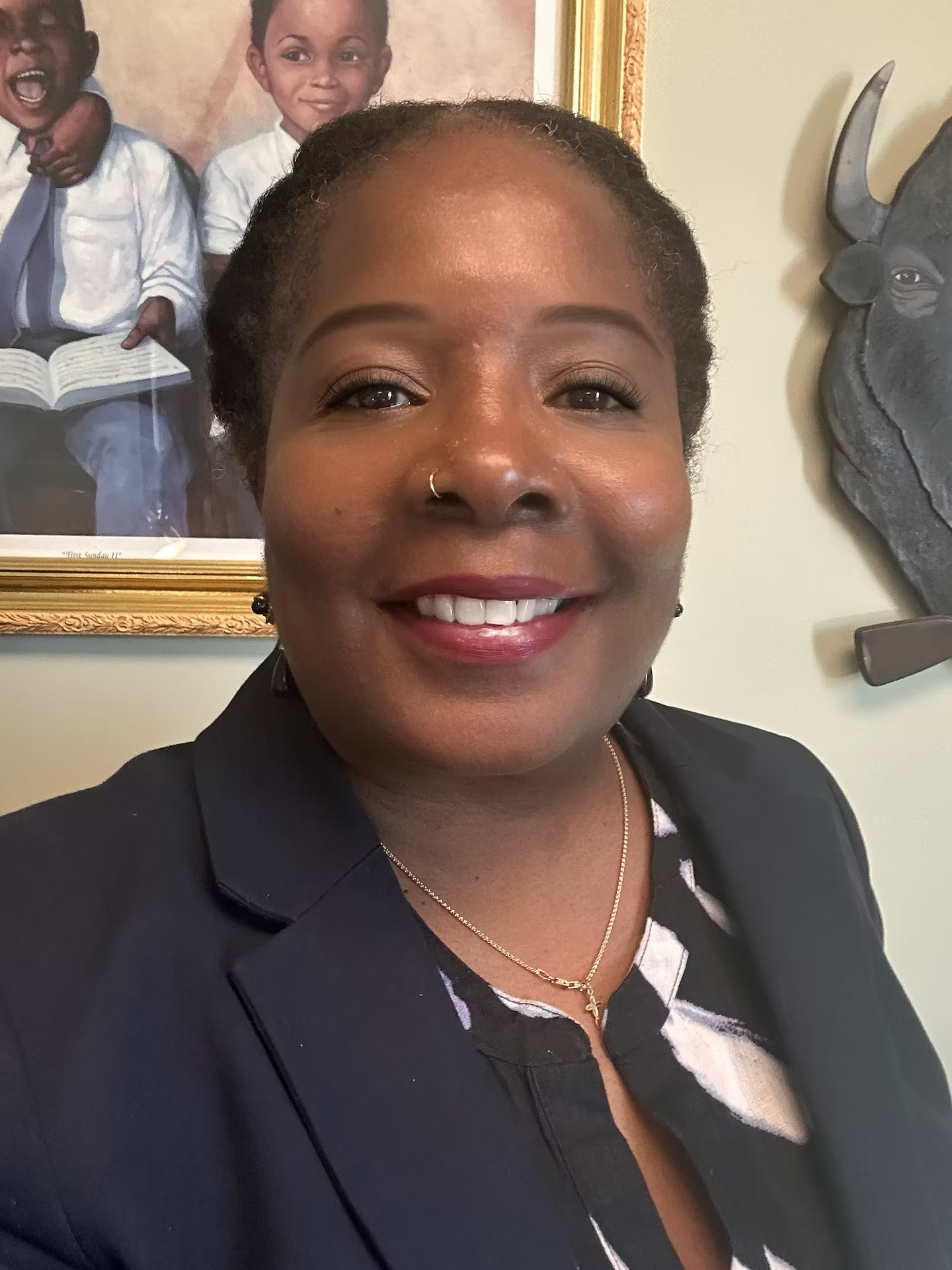
Bridgit is a writer, strategist, and cultural leader with more than two decades of experience helping mission-driven organizations bring their stories to life, secure transformative funding, and build equity-centered systems. Through Medium Communications, my consultancy, I lead strategic initiatives that bridge legacy, justice, and innovation.
Lorem ipsum dolor sit amet, consectetur adipiscing elit. Suspendisse varius enim in eros elementum tristique. Duis cursus, mi quis viverra ornare, eros dolor interdum nulla, ut commodo diam libero vitae erat. Aenean faucibus nibh et justo cursus id rutrum lorem imperdiet. Nunc ut sem vitae risus tristique posuere.
Lorem ipsum dolor sit amet, consectetur adipiscing elit. Suspendisse varius enim in eros elementum tristique. Duis cursus, mi quis viverra ornare, eros dolor interdum nulla, ut commodo diam libero vitae erat. Aenean faucibus nibh et justo cursus id rutrum lorem imperdiet. Nunc ut sem vitae risus tristique posuere.